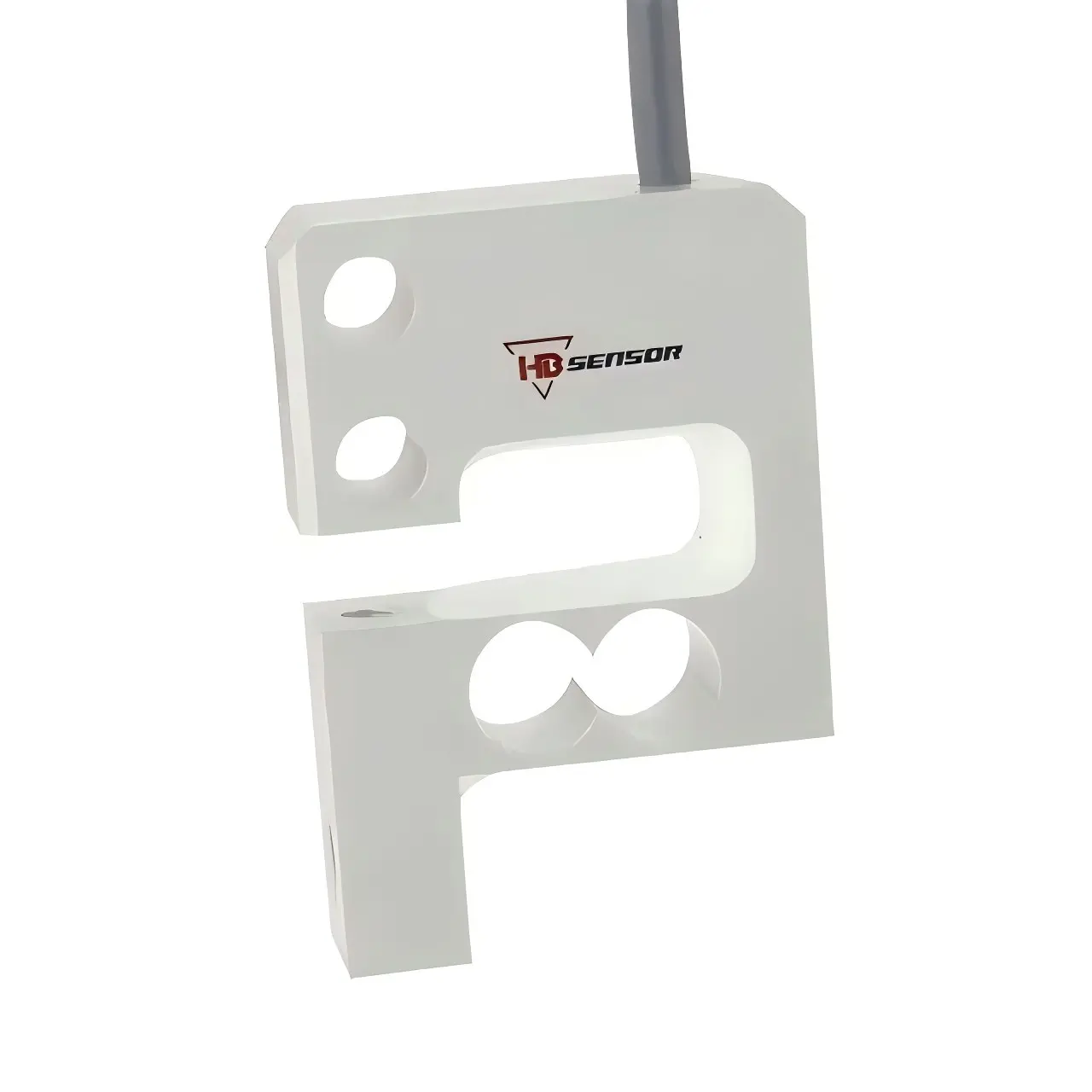

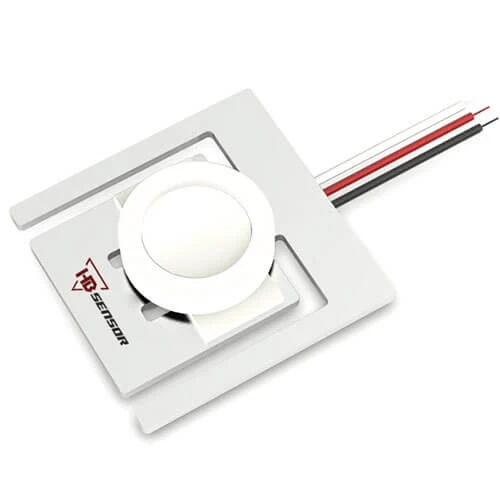
The kitchen scale load cell is the core sensing component of a digital kitchen weighing scale, playing a key role in weighing accuracy and stability. Proper load cell selection is essential for building the best kitchen weighing scale, as overall performance depends on the load cell, mechanical design, and signal processing.
With over 15 years of R&D and manufacturing experience, Haibo offers load cells ranging from 500g to 10kg, along with selection support, specification customization, and bulk supply. Whether you are developing a precision coffee scale, a home kitchen scale, or a baking scale, we can help you find a suitable solution.
When choosing a kitchen scale load cell, a larger capacity is not always better. While a higher-capacity load cell can handle more weight, an oversized load cell may reduce the system’s effective resolution for small weight changes.
For example, if a kitchen scale has a maximum weighing capacity of 2 kg and is mainly used to weigh ingredients from 100 g to 1 kg, a 2kg load cell may be more suitable than a 5kg load cell. However, if the scale needs to weigh up to 5 kg, a 2kg load cell would not be appropriate. Therefore, when selecting load cell capacity, consider the scale’s maximum weighing range, actual application requirements, and a suitable safety margin.
In short, the right load cell for a kitchen scale is not the largest or smallest one, but the one that matches the application.
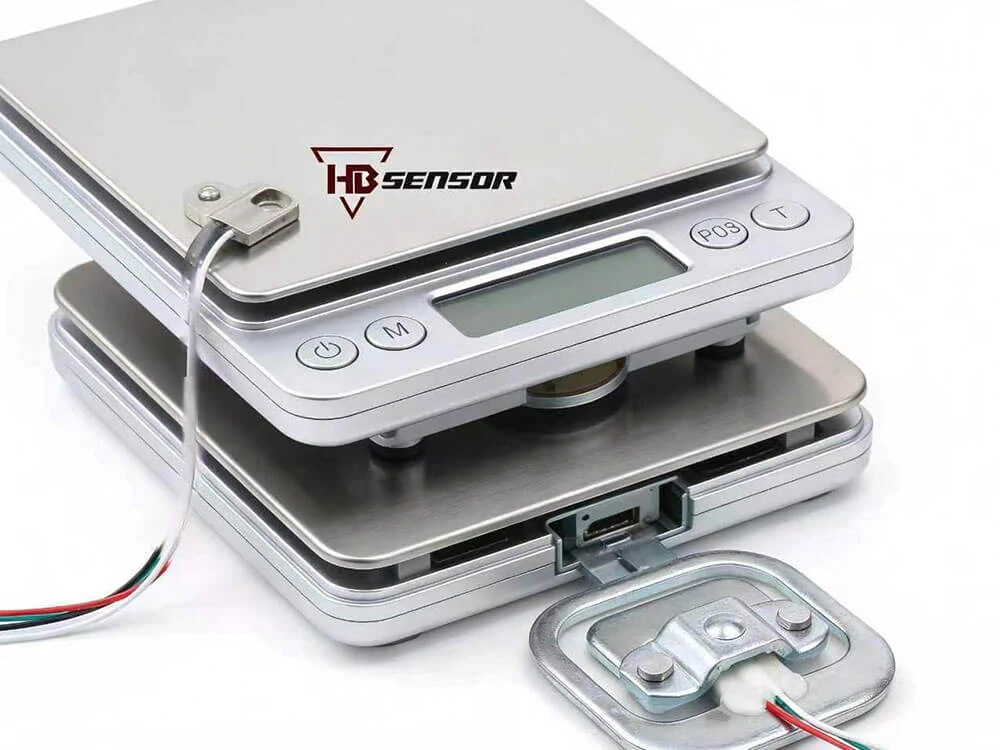
So how do you choose the right kitchen scale load cell? Below are common kitchen scale load cell applications and their suitable capacity ranges to help you select the right load cell quickly. Capacity selection is not a guess—it starts with a simple load cell capacity calculation based on the scale’s maximum weighing range and safety margin. If you’re not sure which specification fits best, contact us—we can recommend a load cell based on your application and support customization.
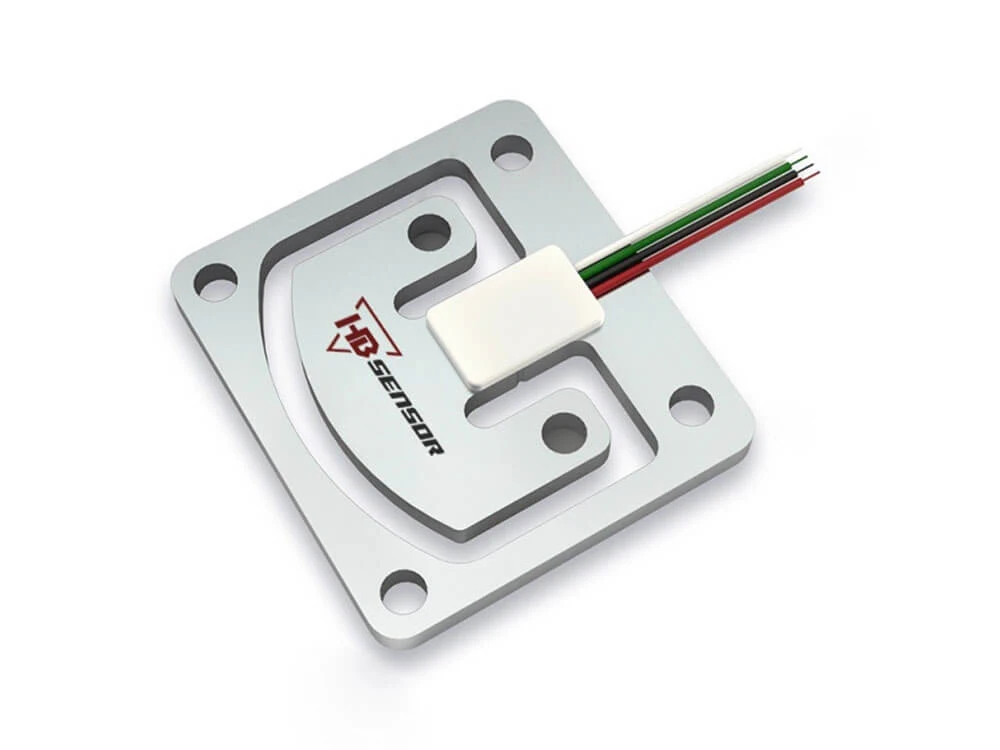
This capacity range suits coffee scales, precision kitchen scales, and other small scales that require high resolution. A low-capacity load cell offers better small-weight resolution than a 5kg unit. Choosing a 500g or 1kg load cell lets the typical weighing range account for a larger share of full capacity, which helps improve effective resolution for small weight changes. For applications like coffee grounds and spices that require fine weight control, this range strikes a good balance between resolution and headroom.
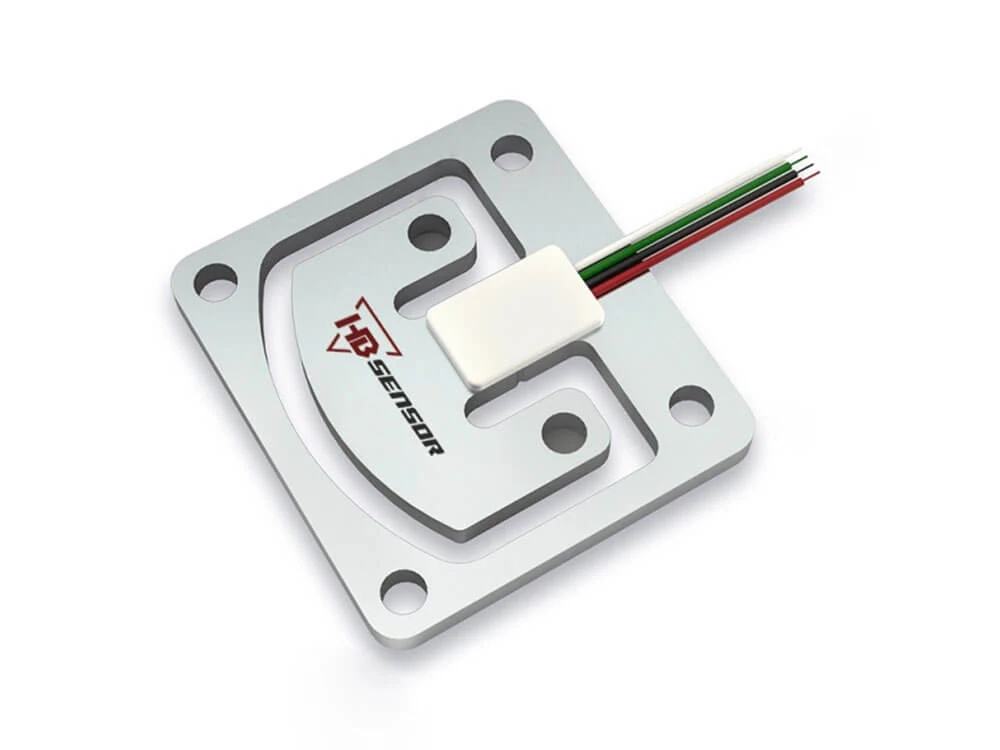
The 1–2kg range suits everyday precision kitchen scales. It can be used for coffee beans, baking flour, liquids such as milk, water, and cooking oil weighed with tare, or portioning nuts and grains by gram. For kitchen scales that need 0.1g resolution but don’t require a capacity above 3kg, the 1–2kg range lets the typical weighing range account for a larger share of full capacity, helping improve effective resolution for small weight changes.
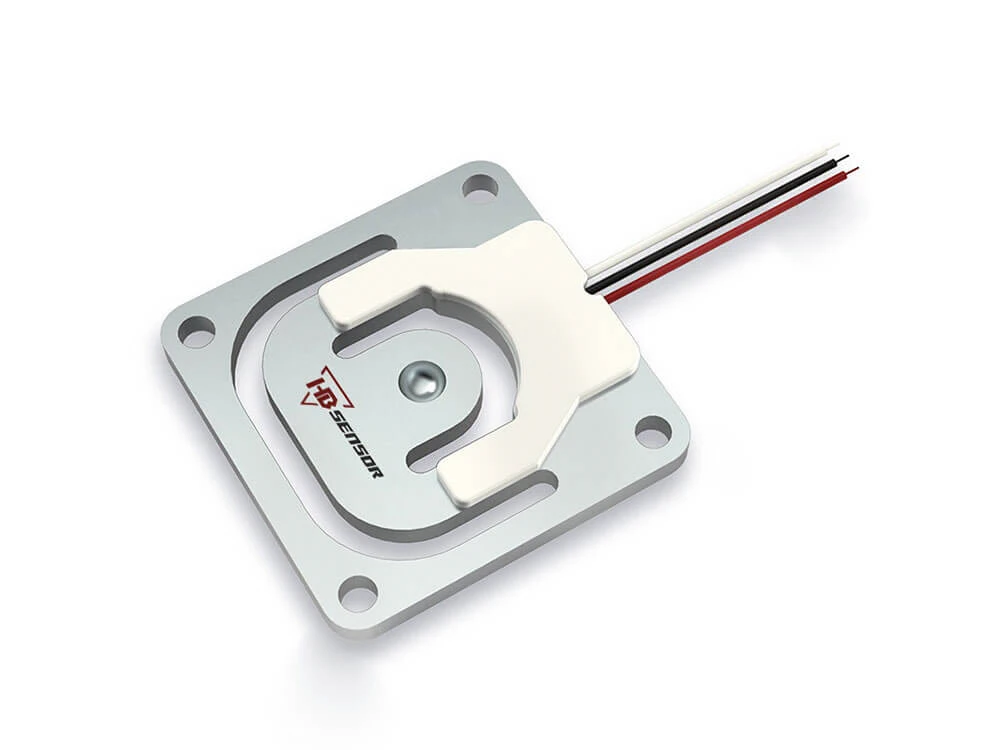
The 3–5kg range suits most home kitchen scales and meets the needs of daily cooking, larger ingredient portions, and baking. Common products use 3kg/1g or 5kg/1g configurations, striking a good balance between capacity and 1g resolution. For home kitchen scales that don’t need 0.1g resolution but prioritize stability and durability, a 3–5kg load cell is a common choice.
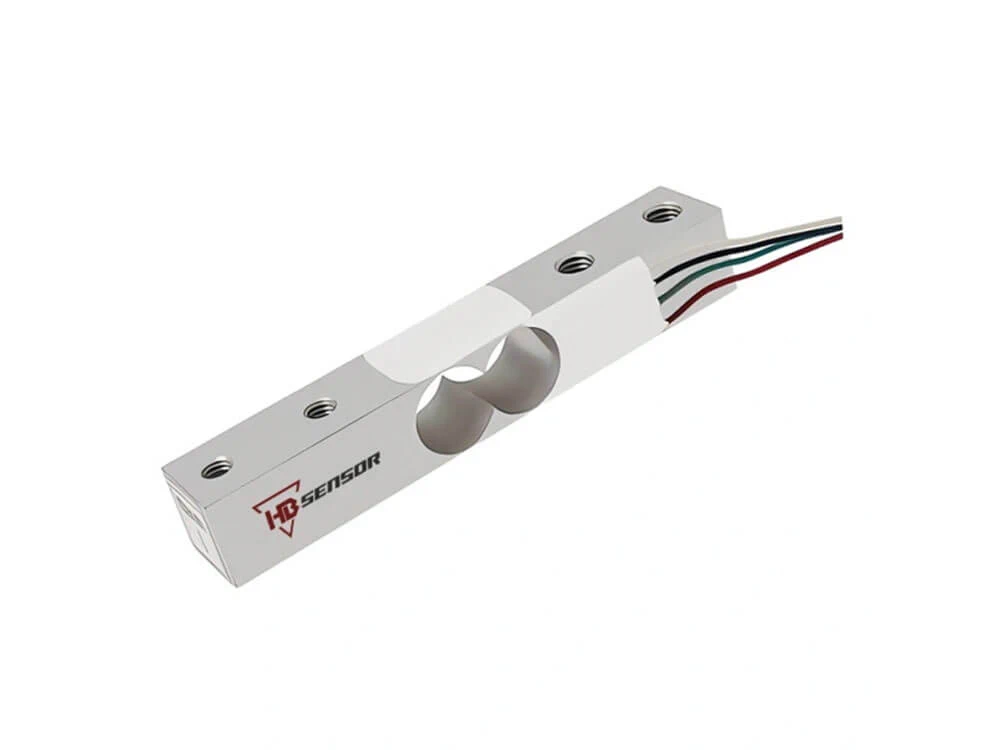
The 5–10kg range is mainly for large-portion home kitchen scales and commercial kitchen weighing equipment, such as full-tray baking, bulk ingredient prep and portioning, and dough dividing in bakeries. These scales typically use single-point load cells. A larger capacity meets heavy weighing needs and also suits applications where 1g resolution is the primary requirement.
The number of load cells used in a kitchen scale is not fixed. It depends on the product design, weighing range, thickness, and cost requirements. Two common configurations are a single-point full-bridge load cell and a four-sensor half-bridge configuration.
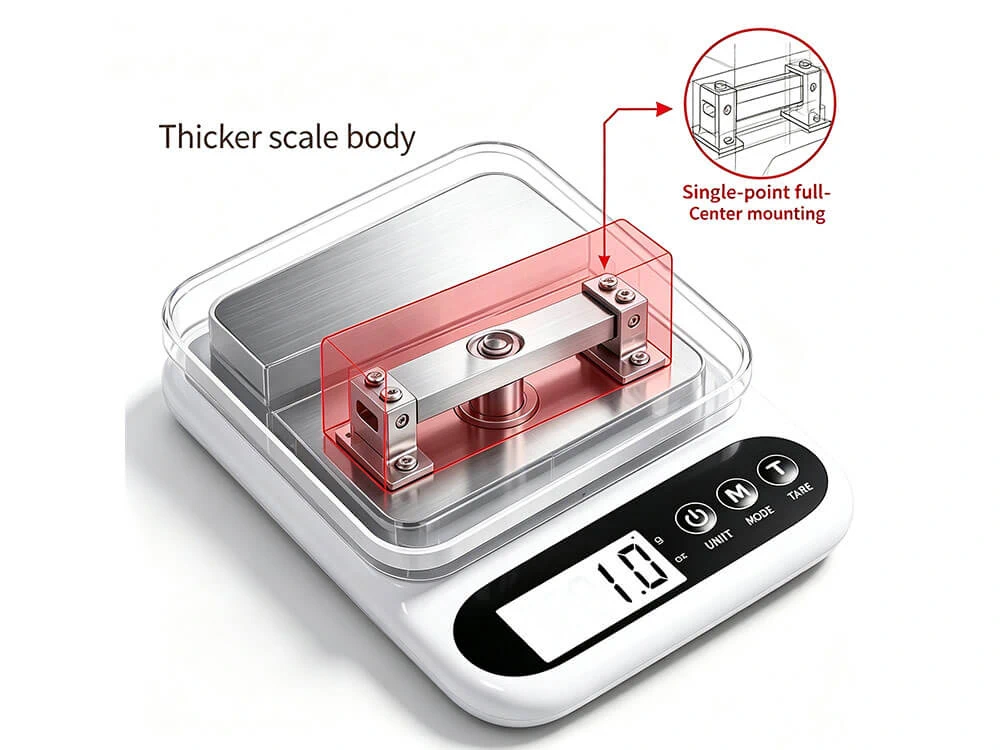
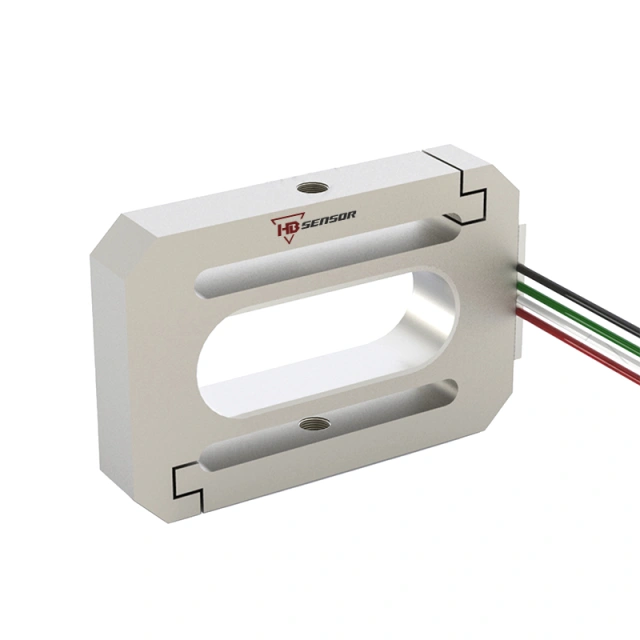
A single-point load cell is a common choice for precision kitchen scales. Although it is typically thicker than a half-bridge sensor, only one load cell for a kitchen scale is needed to support the entire weighing platform. It also provides good resistance to off-center loading, helping maintain stable weighing results when ingredients are placed at different positions on the platform.
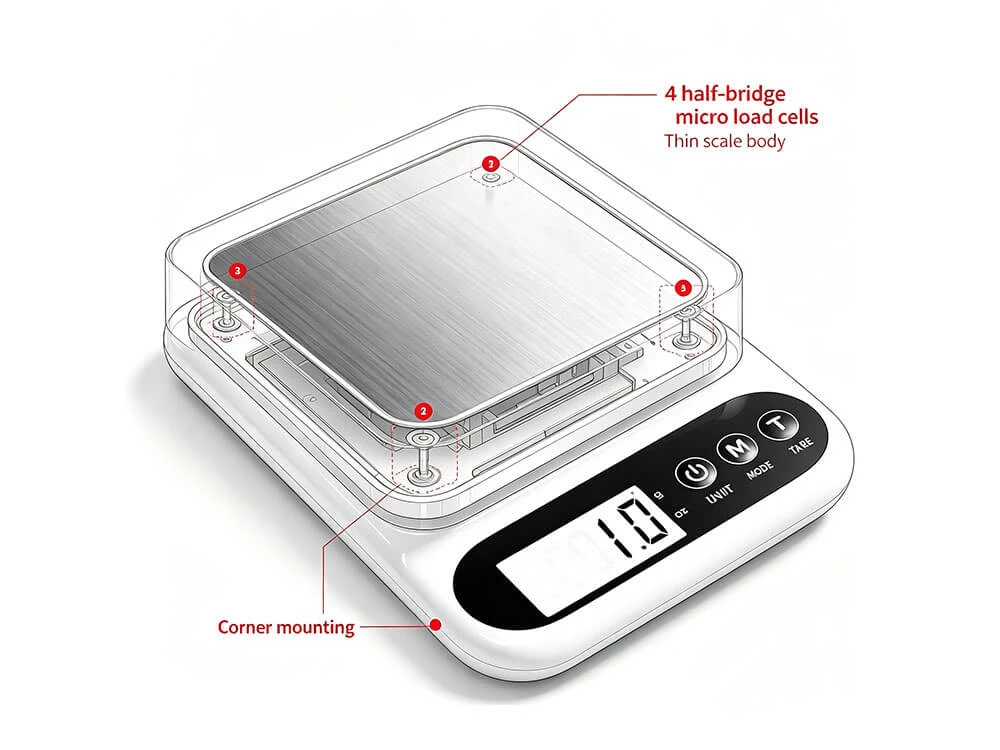
A four half-bridge load cell configuration is often used in ultra-thin kitchen scales. Because each sensor is relatively thin, the four sensors can be installed at the four corners of the weighing platform, allowing for a slimmer product design. The four sensors work together to form a complete weighing system, while the overall weighing capacity depends on the sensor specifications and mechanical design of the scale.
In a kitchen scale load cell, accurate weight measurement starts with the ability to detect very small changes in force. Strain gauges play an essential role in this process by sensing the deformation of the load cell’s elastic element. Understanding how strain gauges work also provides a closer look at the load cell working principle and the key components behind reliable weighing performance.
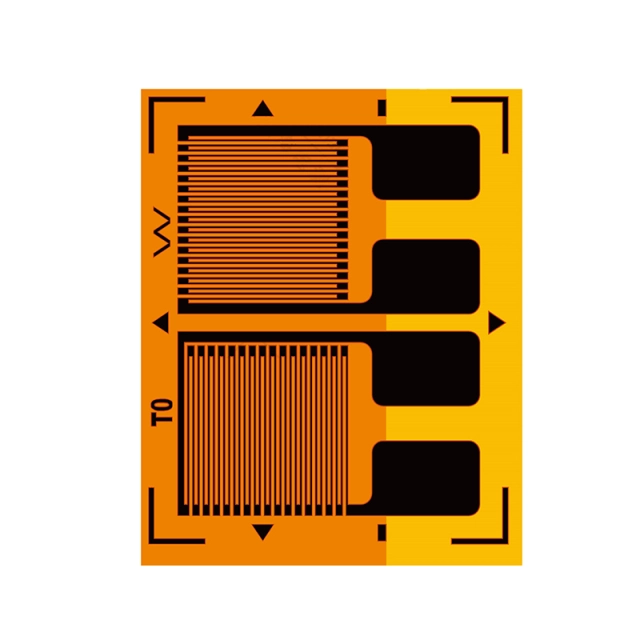
Strain gauges are key sensing elements inside load cells. They detect the tiny deformation of the load cell’s elastic element when a force is applied and convert mechanical strain into a change in electrical resistance. As an important part of the load cell structure, strain gauges need to maintain consistent performance to support stable and reliable weighing results.
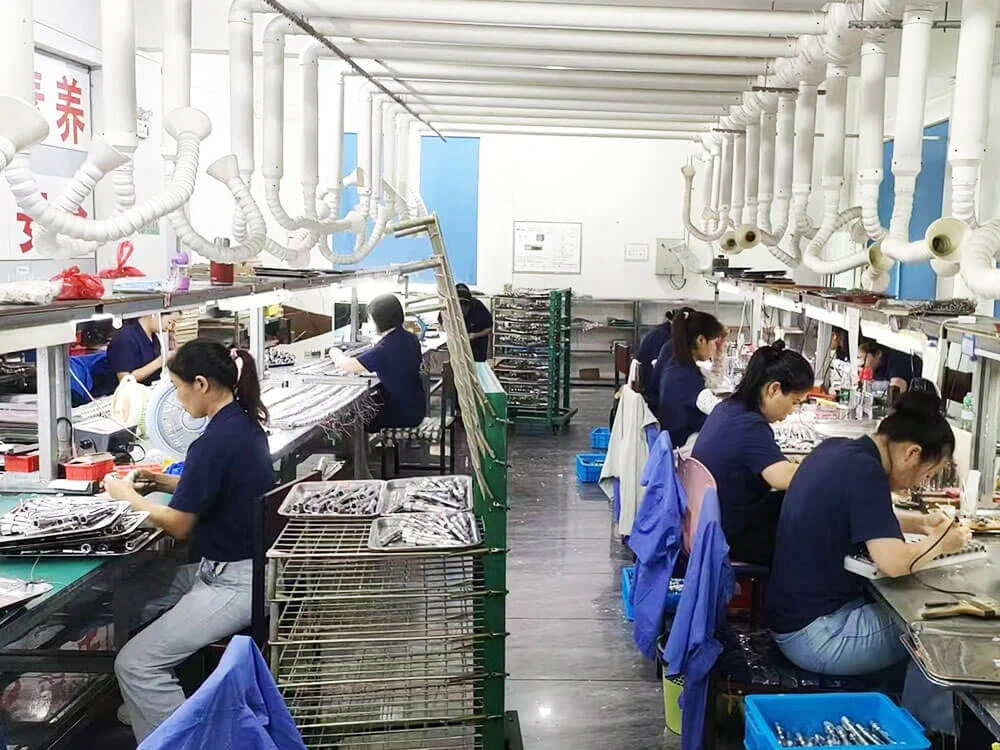
We are not only a load cell supplier but also manufacture strain gauges in-house. This gives us greater control over the consistency and performance of key sensing elements used in our high-precision load cells, while allowing us to provide flexible customization for different load cells for weighing applications.
In the video below, take a look inside our production workshop to see how we manufacture strain gauges for different load cell applications, including material preparation, pattern processing, bonding, and inspection.
To achieve the specified accuracy of a kitchen scale load cell, proper installation and wiring are essential. Load cell installation ensures that the applied force is correctly transferred to the sensor, while load cell wiring ensures that the signal is properly transmitted. Errors in either step may result in unstable readings or zero-point shift.
Proper load cell installation is important for achieving stable and reliable weighing performance. A kitchen scale load cell should be installed on a rigid, flat base with clean and properly aligned mounting surfaces. Mounting screws should be tightened according to the torque requirements specified in the datasheet. Sufficient clearance should be maintained between the weighing platform and housing to prevent contact or friction from affecting weighing results.
Different types of load cells have different mounting methods. A single-point load cell is typically installed between the base and weighing platform, while a four-half-bridge configuration typically places four sensors at the four corners of the weighing platform. The exact mounting method depends on the sensor specifications and product structure.
A kitchen scale load cell outputs a millivolt-level differential signal, which is typically converted through a weighing ADC such as HX711 before being read and processed by the MCU. The HX711 integrates a 24-bit ADC and programmable gain amplifier and is commonly used in weighing systems.
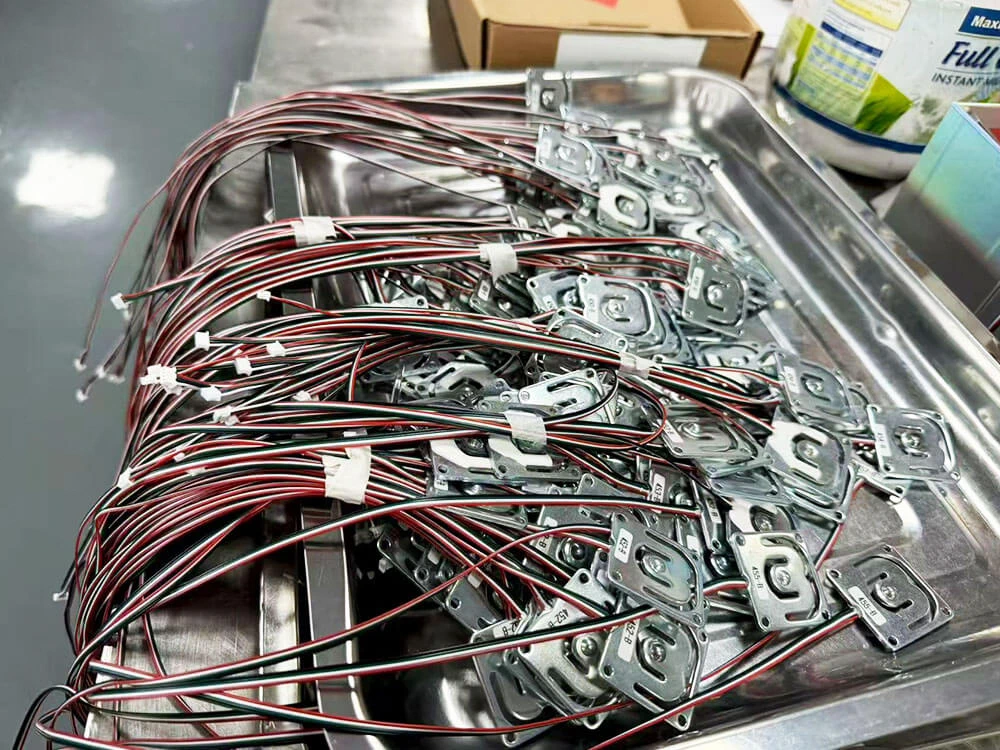
A single-point full-bridge load cell typically uses a four wire connection, including E+ and E− excitation lines and A+ and A− signal lines. In a four-half-bridge configuration, the four half-bridge sensors must be combined into a complete Wheatstone bridge according to the circuit design before being connected to the weighing ADC. Proper load cell wiring is essential for accurate signal transmission. Wire colors and load cell connection methods may vary between models, so always follow the product datasheet or wiring diagram.
The rated capacity of a kitchen scale load cell is the starting point when choosing the right load cell. Beyond capacity, load cell specifications such as accuracy, sensitivity, repeatability, creep, material, and dimensions also need to be carefully considered. These key specifications work together to determine how well the kitchen scale load cell matches the scale in terms of weighing performance, stability, and mechanical design. In the following sections, we will examine these key factors to help you make the right selection more quickly.
| Specification | Why It Matters | What to Consider |
| Rated Capacity | Determines the maximum load the load cell is designed to measure. | Match the load cell capacity to the scale’s maximum weighing range and allow an appropriate safety margin based on the application and mechanical design. |
| Accuracy | Affects weighing performance and measurement consistency. | Pay attention to nonlinearity, hysteresis, and repeatability. Precision kitchen scales may require tighter error specifications depending on the target weighing performance. |
| Sensitivity | Determines the output signal under load, typically expressed in mV/V. | Make sure the sensitivity is compatible with the weighing ADC and signal-processing circuit. |
| Repeatability | Indicates how consistently the load cell responds when the same load is applied repeatedly. | Higher repeatability helps provide stable and consistent weight readings, especially in precision weighing applications. |
| Creep | Describes output change when a constant load is maintained over time. | Check the specified creep performance and test conditions when stable readings must be maintained under continuous loading. |
| Material | Affects strength, weight, durability, and environmental resistance. | Aluminum alloy is lightweight and easy to machine, while stainless steel generally offers better corrosion resistance. The appropriate material depends on the application and product design. |
| Dimensions & Mounting | Determine whether the load cell can be properly integrated into the scale structure. | Check the overall dimensions, mounting holes, mounting method, and cable length. Follow the manufacturer’s datasheet for mounting dimensions and recommended screw torque. |
When selecting a kitchen scale load cell, you may find that many products on the market are standard models. For customers with specific specification or structural requirements, this can limit their options. In such cases, working directly with a load cell manufacturer can provide more flexibility. As a load cell manufacturer, we provide both standard models and customized solutions based on customer requirements. Whether you need custom load cell dimensions, rated capacity, mounting methods, cable length, or other specifications, we can evaluate your product design and application requirements and quickly provide a suitable customized solution.
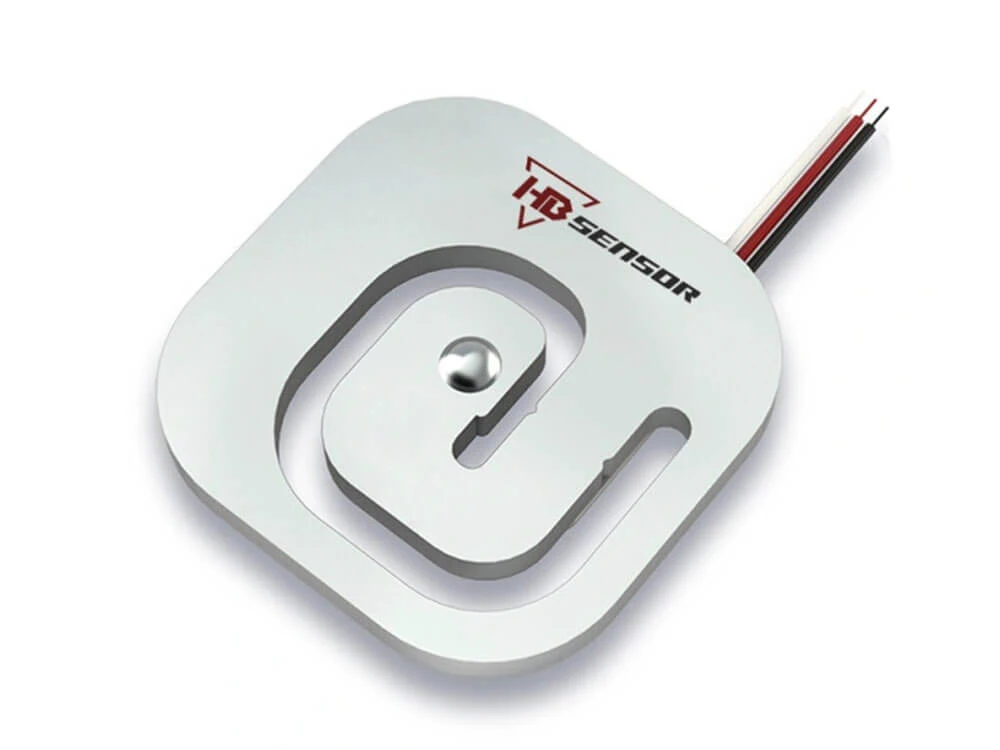
We offer different rated capacities to match your kitchen scale’s weighing range and application requirements.
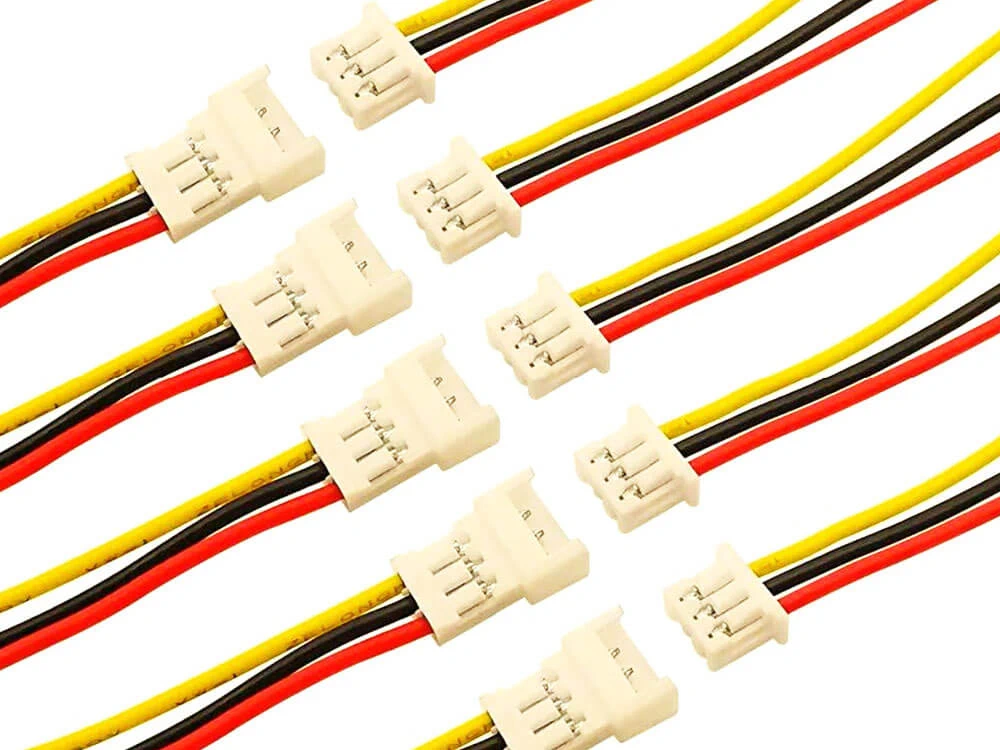
Connector types and terminal configurations can be customized to suit your circuit design and assembly needs.
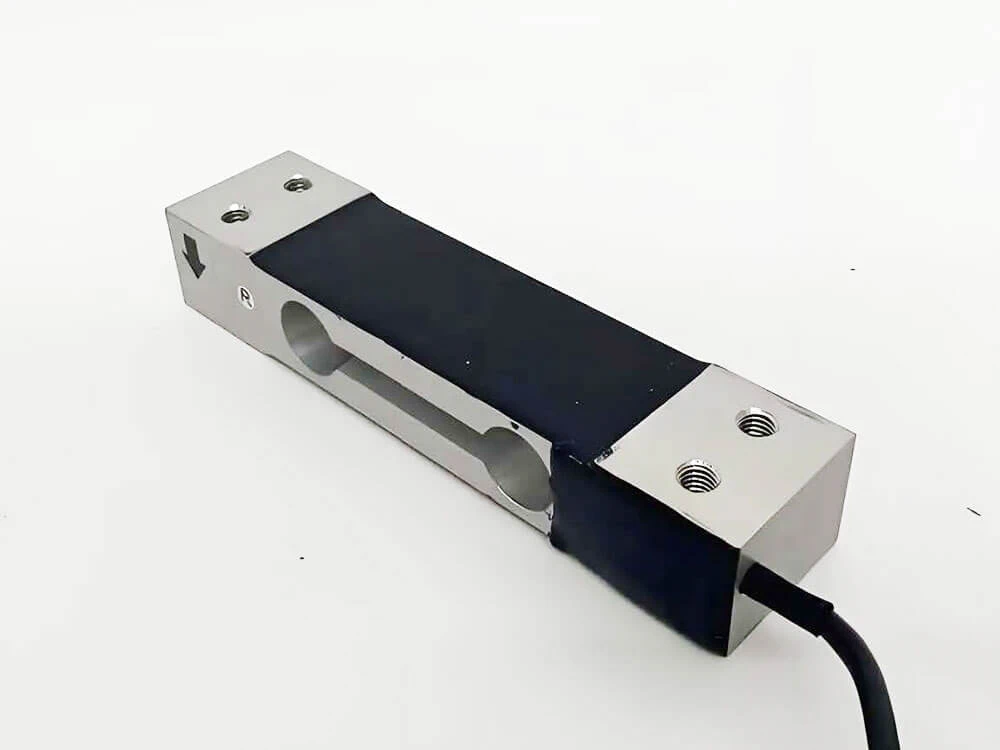
Suitable protection ratings can be selected based on moisture exposure, cleaning conditions, and operating environments.
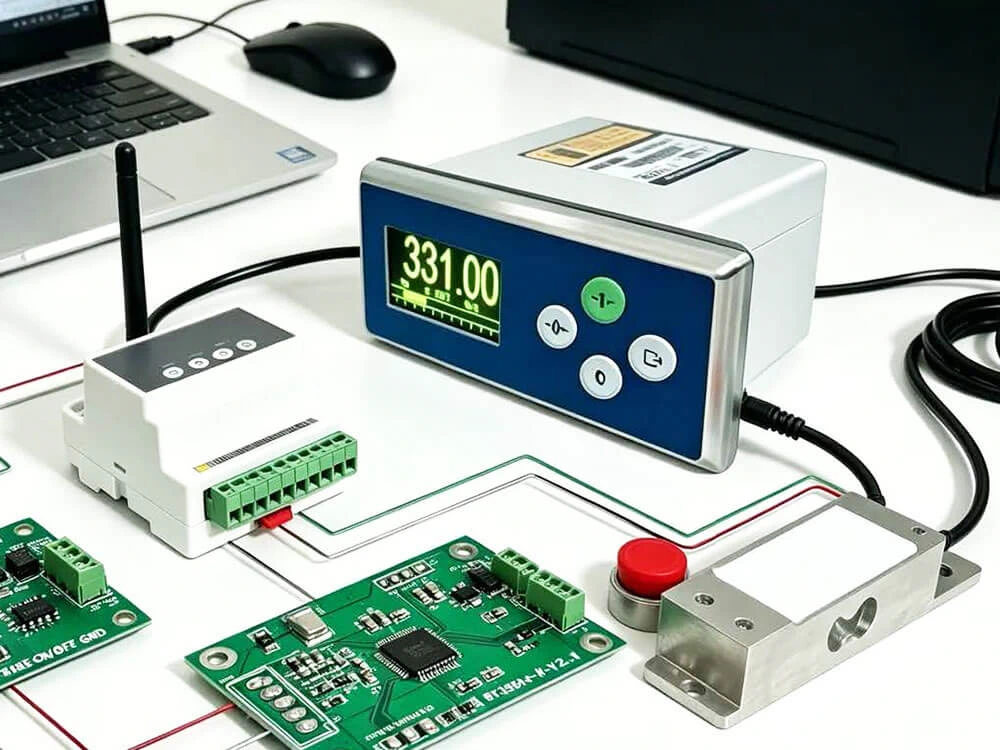
Load cell signal specifications can be tailored to match your weighing circuit and measurement requirements.
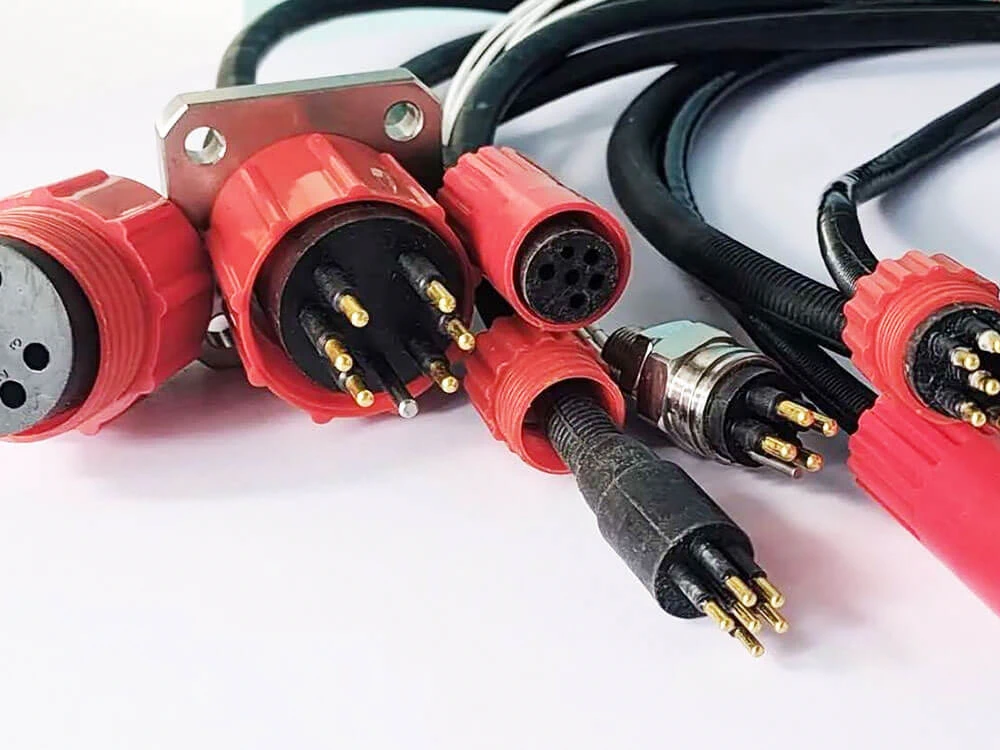
Cable length can be adjusted to fit your kitchen scale layout and simplify installation.
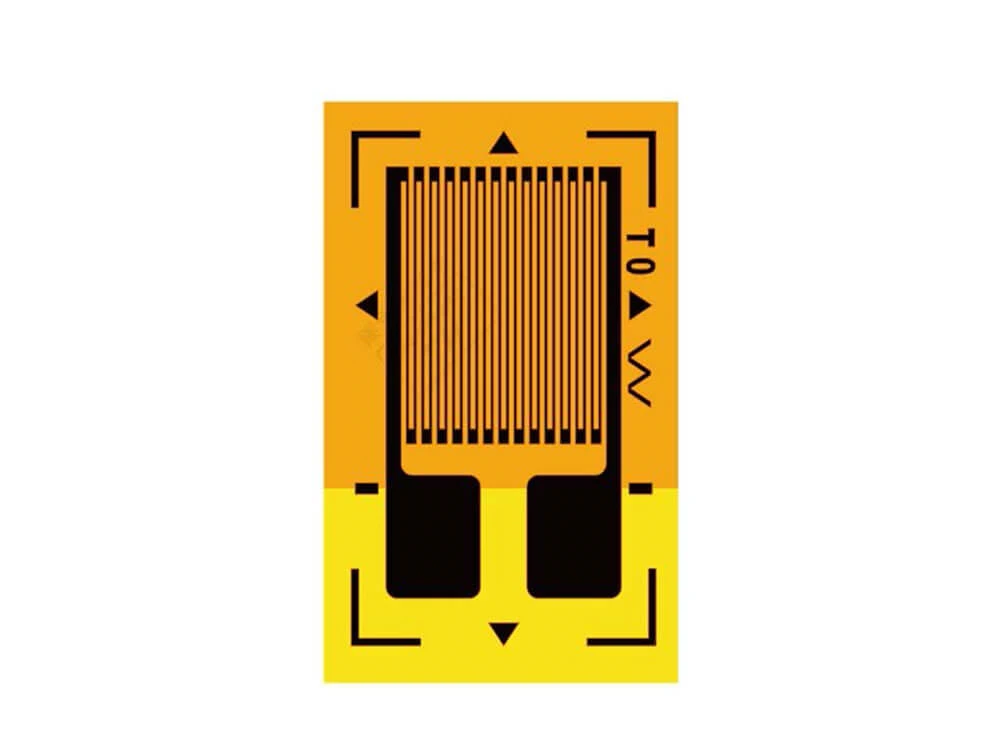
Strain gauge specifications and temperature compensation options can be customized to meet different operating temperature ranges and performance requirements.
Choosing the right kitchen scale load cell involves more than matching the rated capacity. Considering load cell types, structure, accuracy, installation, and application requirements can help you select the right sensor for your kitchen scale design. From a miniature load cell for precision coffee scales to higher-capacity sensors for home kitchen and baking scales, Haibosensor offers standard and customized kitchen scale load cells with selection support based on your product requirements.
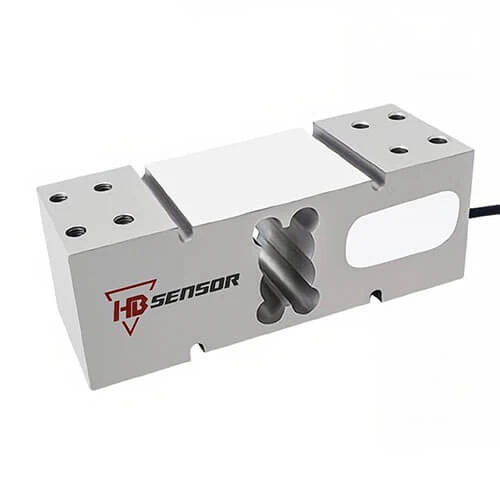
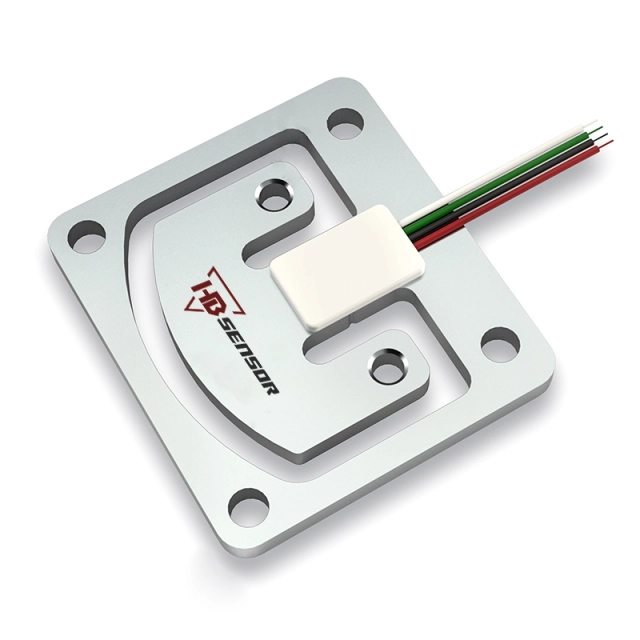
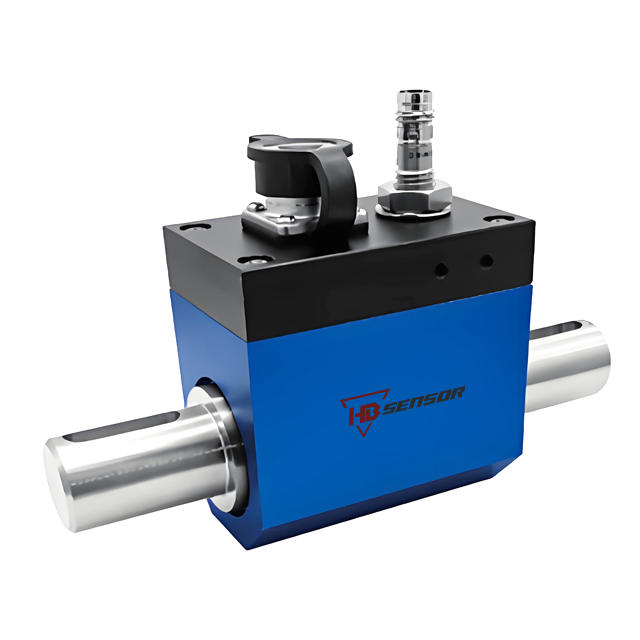
As the best quality load cell sensor products manufacturer, we can provide professional solutions for any custom request. Please feel free to contact us now and we will contact you soonest.
You can get a price of this model or send us any question to get any information you would like to know, we will reply to you soonest.